Electrolysis for Blemish Removal
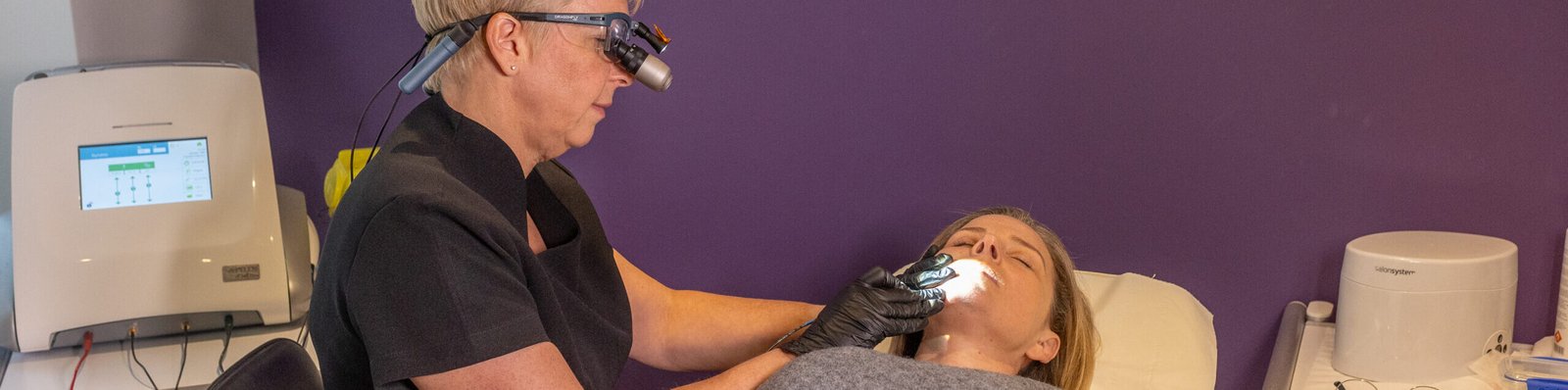
Facial Red Veins
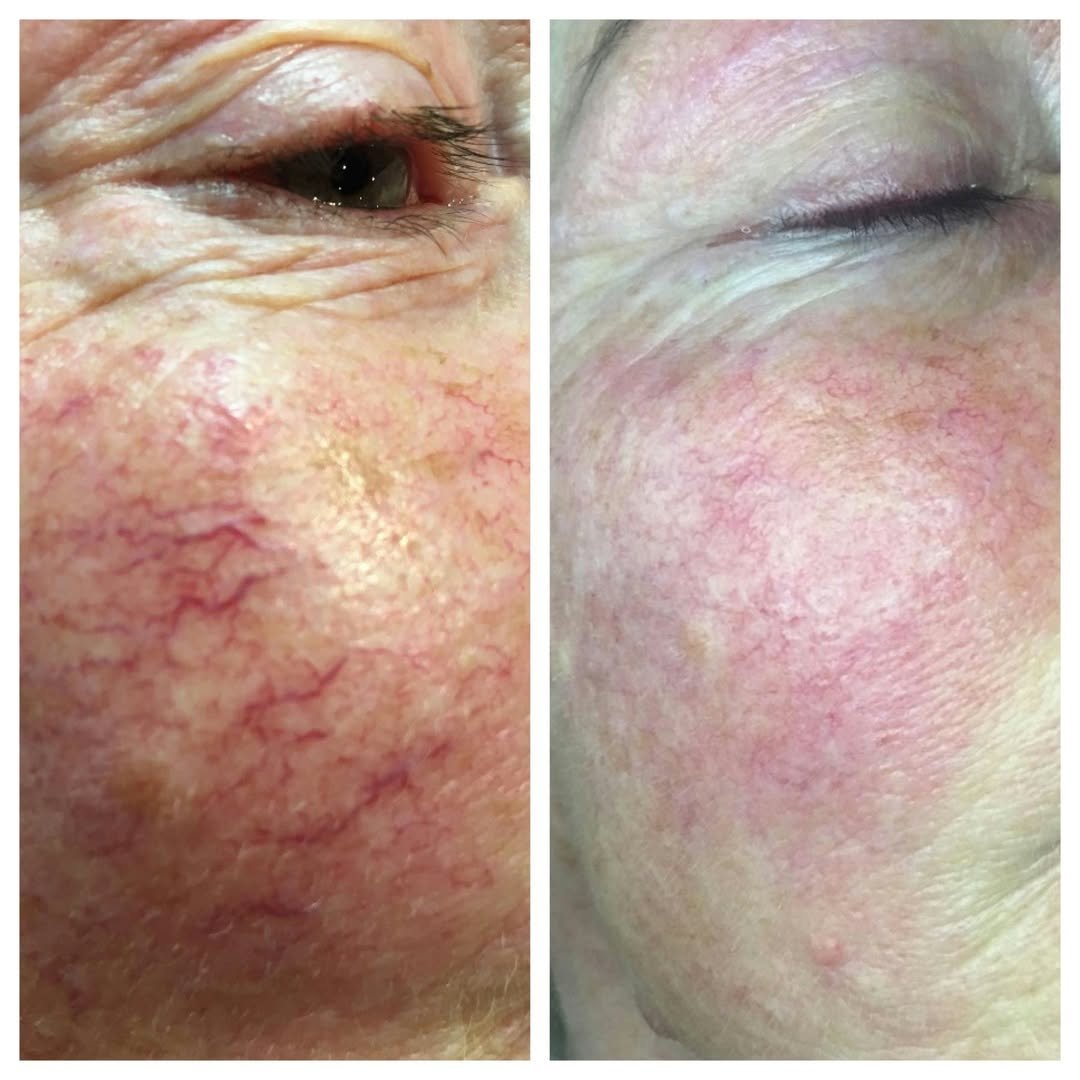
Are you self-conscious of red veins on your face? Perhaps you’re spending time and money concealing them every day? Did you know they are easily treatable?
Also known as broken capillaries, thread veins and broken veins or to use their medical name, telangiectasia, are usually found on more exposed areas of the face such as the nose, cheeks and chin. They present as a permanent dilation of tiny blood vessels visible under the top layer of your skin.
There is a wide range of causes of facial red veins and they can occur across all ages. Some of the possible causes are:
- ageing (As we age these tiny blood vessels lose their elasticity becoming permanently dilated)
- genetics
- excessive alcohol consumption
- physical trauma (a knock or injury to the area)
- straining (through constipation, during childbirth or strenuous exercise)
- extreme temperatures & harsh weather exposure
- medication
- menopause (hot flushes dilate superficial vessels)
- over use of harsh exfoliation products
- squeezing spots
- eating spicy foods (if they cause your skin to flush)
- wearing heavy spectacles
- allergy which causes extensive wiping and blowing of the nose can lead to localised red veins
- They are commonly seen in an English rose complexion on a more mature client
What is the cost of treatment?
If your veins are numerous and close together it will not be possible to treat them all in one session as the area would become overworked. A course will be required.
We can work on one area for up to 15 minutes before moving onto the next area. For example, each cheek would class as one area so we could work on each cheek for up to 15 minutes before moving to the other side.
| Up to 15 minutes | £65.00 |
| Up to 30 minutes | £130.00 |
How does it work?
The treatment is a very effective and advanced electrolysis technique which involves dotting along the visible red veins with a very tiny needle, emitting a diathermy current. Each dot involves gently tapping the needle onto the vein. The heat causes the vein to be cauterised, which reduces its ability to carry blood, so depending on the size of the vein, treatment will cause redness to, either disappear completely or reduce dramatically. This effect is immediate and will happen at the time of treatment.
How many sessions will I need?
This is always a tricky question to answer as the results depend on a few factors. Mainly:
- identifying the cause
- how many facial red veins are present
- how far apart the veins are
- how dark and apparent the veins are
- the condition of your skin
- how well your skin heals
- how well you follow the aftercare instructions
- All of the above will be discussed at your initial consultation.
Is the treatment painful?
This is not a sensation-free treatment and there is some discomfort involved! It is best described as a hot pin-prick. The level of sensation does vary from one individual to another. My best advice would be to relax! If you are relaxed you are likely to experience less discomfort than if you are nervous and tense. You may also find the treatment more uncomfortable if you are tired, unwell or during certain times of your menstrual cycle.
Anaesthetic creams are not necessary or a good idea as they work by causing the blood vessels to constrict which means they wouldn’t be visible to treat.
How often can I have a session?
A minimum of six weeks must be left between each treatment session to ensure full healing in the lower layers of the skin is complete each time.
Are the results permanent?
This depends on the cause. At your consultation we will try to establish what the possible cause might be and discuss any adjustments that you can make in order to prevent more broken capillaries in the future. Once your initial course of treatment is completed an annual session is usually enough to keep on top of any new veins that may appear.
What is the aftercare involved?
Immediately after the treatment, the skin will normally appear pink/red, warm and possibly slightly swollen. Over the following 48 hours tiny healing crusts will form. No cleanser or make-up should be used during the first 48 hours. During the first 48 hours you will need to avoid the following:
- touching the area
- alcohol
- spicy foods
- exercise
- anything which causes sweating (saunas, steam rooms etc)
Once formed the healing crusts must be kept as dry as possible and must not be knocked or picked off. They will naturally lift off after 5-7 days. Early removal of the healing crusts can delay healing and can negate the treatment.
You will be best advised to plan your treatment sessions into your schedule when you have a few days to allow the initial healing to take place. This is not a treatment to have immediately before a big occasion.
Once the healing crusts have fallen off, SPF50 or SPF40 must be used on the treated area for at least 6 weeks. Actively sunbathing must be avoided. The area treated and any area showing an ongoing tendency to facial red veins must be protected by a sunscreen. If you’ve read any of my blogs you’ve probably gathered that I am a huge advocate for wearing SPF daily, all year round. SPF really is your BFF!
Is there anything I can do prior to my appointment?
Yes. Arrive for your appointment make-up free. Removing make-up just before the treatment may result in unnecessary stimulation of your skin, causing redness before we’ve even started.
Use a gentle exfoliator (one with AHA’s, fruit acids or enzymes, NOT a granular one) a couple of days prior to your treatment. This will remove any dead skin cells. If dead skin cells are present at the time of treatment they are picked up on the probe throughout the treatment. The constant cleaning of the probe slows down the progress I can make.
I have veins on my body, can those be treated?
The method we use is advanced electrolysis, also known as diathermy. It is only suitable for the bright red superficial veins on the face and décolleté (upper chest). It is not suitable for the deeper veins on the body.
Can purple or blue veins be treated?
No. Veins that are purple or blue in colour are deeper in the skin and cannot be treated with the method we use.
Are there any medical conditions that would stop me from being treated?
Yes. At your consultation and initial assessment, we would check for any medical conditions that would prevent us from going ahead with the treatment. To prevent you a wasted journey the following conditions would mean you are unsuitable:
- cochlear implants
- history of keloid scarring
- haemophilia
- pacemaker
- taking blood thinning medication (Warfarin or aspirin)
- diabetes
- epilepsy
- high blood pressure
- any vascular or circulatory disorders
- recent suntan (you will need to wait until it has faded)
- recent scar tissue in the area to be treated
- use of retinol, Retin A or tretinoin on the area to be treated
It is vital for effective and safe treatment that you are honest when answering the questions at your consultation.
Spider Nivae
Are you self-conscious of a spider naevus? Perhaps you’re spending time and money concealing them every day? Did you know they are easily treatable?
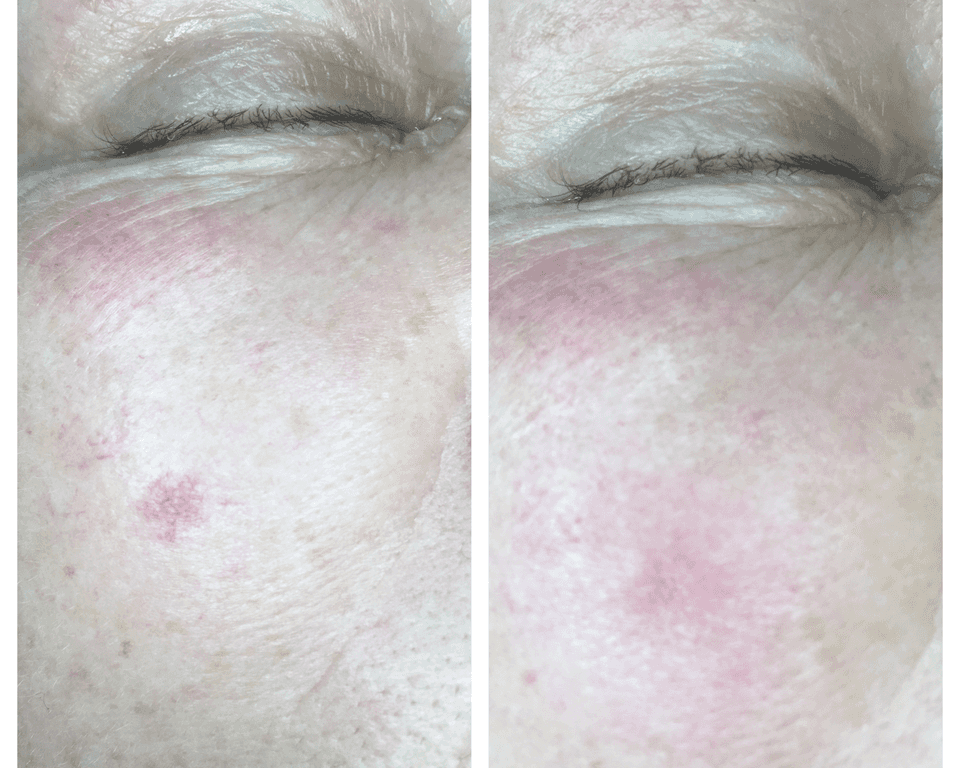
Spider naevi like facial red veins are another form of telangiectasia or vascular blemish. They present as a permanent dilation of tiny blood vessels visible under the top layer of your skin, and look like a cluster of tiny red veins. They are distinguished by their central dilated blood vessel with smaller dilated vessels branching from it. They look like the legs of a spider, after which this vascular blemish is named.
There is a wide range of causes of spider naevi. They are typically a direct result of an externally caused trauma to the skin, such as a knock with a sharp object, injury and even picking a spot. Other common causes of spider naevi are:
- Over-exposure to the sun (vasodilation occurring through sun exposure and sunburn can cause spider naevi)
- Changes in hormone levels (puberty & pregnancy)
- Extreme temperatures (eg heat & cold)
- Obesity (causes pressure on vessels, which can cause spider naevi)
- Spectacles (where they rub)
- Tight clothing
- Liver disorder (Spider naevi appearing spontaneously on the abdomen could indicate possible liver congestion or a related liver disorder. If you are experiencing this, you should consult your GP)
What is the cost of treatment?
| Up to 15 minutes | £65.00 |
| Up to 30 minutes | £130.00 |
If we are working on one spider naevi, each session would be a maximum of 15 minutes.
How does it work?
The treatment is a very effective and advanced electrolysis technique which involves dotting along the visible red veins with a very tiny needle, emitting a diathermy current. Each dot involves gently tapping the needle onto the vein. The heat causes the vein to be cauterised, which reduces its ability to carry blood, so depending on the size of the vein, treatment will cause the redness to either disappear completely, or reduce dramatically. This effect is immediate and will happen at the time of treatment.
How many sessions will I need?
Diathermy is a highly successful technique to treat the appearance of spider naevi, as the needle targets the specific vessels only and does not touch the surrounding skin and, due to the superficial nature of the vessels, they respond very well.
The veins in spider naevi are numerous and close together. The first treatment of a spider naevi will significantly reduce the blemish, however further treatments will be necessary to remove it altogether. It will not be possible to treat them all in one session as the area would become overworked.
For that reason, we advise that two or three sessions will be necessary. The first treatment of a spider naevi will significantly reduce the blemish, and then further treatments will be necessary to remove it altogether. The more severe the spider naevi, the more sessions it may require.
How often can I have a session?
A minimum of six weeks must be left between each treatment session to ensure full healing in the lower layers of the skin is complete each time.
Is the treatment painful?
This is not a sensation-free treatment and there is some discomfort involved! It is best described as a hot pin-prick. The level of sensation does vary from one person to another. My best advice would be to relax! If you are relaxed you are likely to experience less discomfort than if you are nervous and tense. You may also find the treatment more uncomfortable if you are tired, unwell or during certain times of your menstrual cycle.
Anaesthetic creams are not necessary or a good idea as they work by causing the blood vessels to constrict which means they wouldn’t be visible to treat.
Are the results permanent?
This depends on the cause. At your consultation we will try to establish what the possible cause might be and discuss any adjustments that you can make in order to prevent more spider naevi in the future.
What is the aftercare involved?
Immediately after the treatment, the skin will normally appear pink/red, warm and possibly slightly swollen. Over the following 48 hours tiny healing crusts will form. No cleanser or make-up should be used during the first 48 hours. During the first 48 hours you will need to avoid the following:
- touching the area
- alcohol
- spicy foods
- exercise
- anything which causes sweating (saunas, steam rooms etc)
Once formed the healing crusts must be kept as dry as possible and must not be knocked or picked off. They will naturally lift off after 5-7 days. Early removal of the healing crusts can delay healing and can negate the treatment.
You will be best advised to plan your treatment sessions into your schedule when you have a few days to allow the initial healing to take place. This is not a treatment to have immediately before a big occasion.
Once the healing crusts have fallen off, SPF50 or SPF40 must be used on the treated area for at least 6 weeks. Actively sunbathing must be avoided. The area treated and any area showing an ongoing tendency to facial red veins must be protected by a sunscreen. If you’ve read any of my blogs you’ve probably gathered that I am a huge advocate for wearing SPF daily, all year round. SPF really is your BFF!
Is there anything I can do prior to my appointment?
Yes. Arrive for your appointment make-up free. Removing make-up just before the treatment may result in unnecessary stimulation of your skin, causing redness before we’ve even started.
Use a gentle exfoliator (one with aha’s, fruit acids or enzymes, NOT a granular one) a couple of days prior to your treatment. This will remove any dead skin cells. If dead skin cells are present at the time of treatment they are picked up on the probe throughout the treatment. The constant cleaning of the probe this causes slows down the progress I can make.
I have Spider Nivae on my body, can those be treated?
The method we use is advanced electrolysis, also known as diathermy. It is only suitable for the bright red superficial veins on the face and décolleté (upper chest).
Are there any medical conditions that would stop me from being treated?
Yes. At your consultation and initial assessment, we would check for any medical conditions that would prevent us from going ahead with the treatment. To prevent you a wasted journey the following conditions would mean you are unsuitable:
- cochlear implants
- history of keloid scarring
- haemophilia
- pacemaker
- taking blood thinning medication (Warfarin or aspirin)
- diabetes
- epilepsy
- high blood pressure
- any circulatory disorders
- recent suntan (you will need to wait until it has faded)
- recent scar tissue in the area to be treated
- use of retinol, Retin A or tretinoin on the area to be treated
It is vital for effective and safe treatment that you are honest when answering the questions at your consultation.
Skin Tags
Are you looking for someone who can remove skin tags?
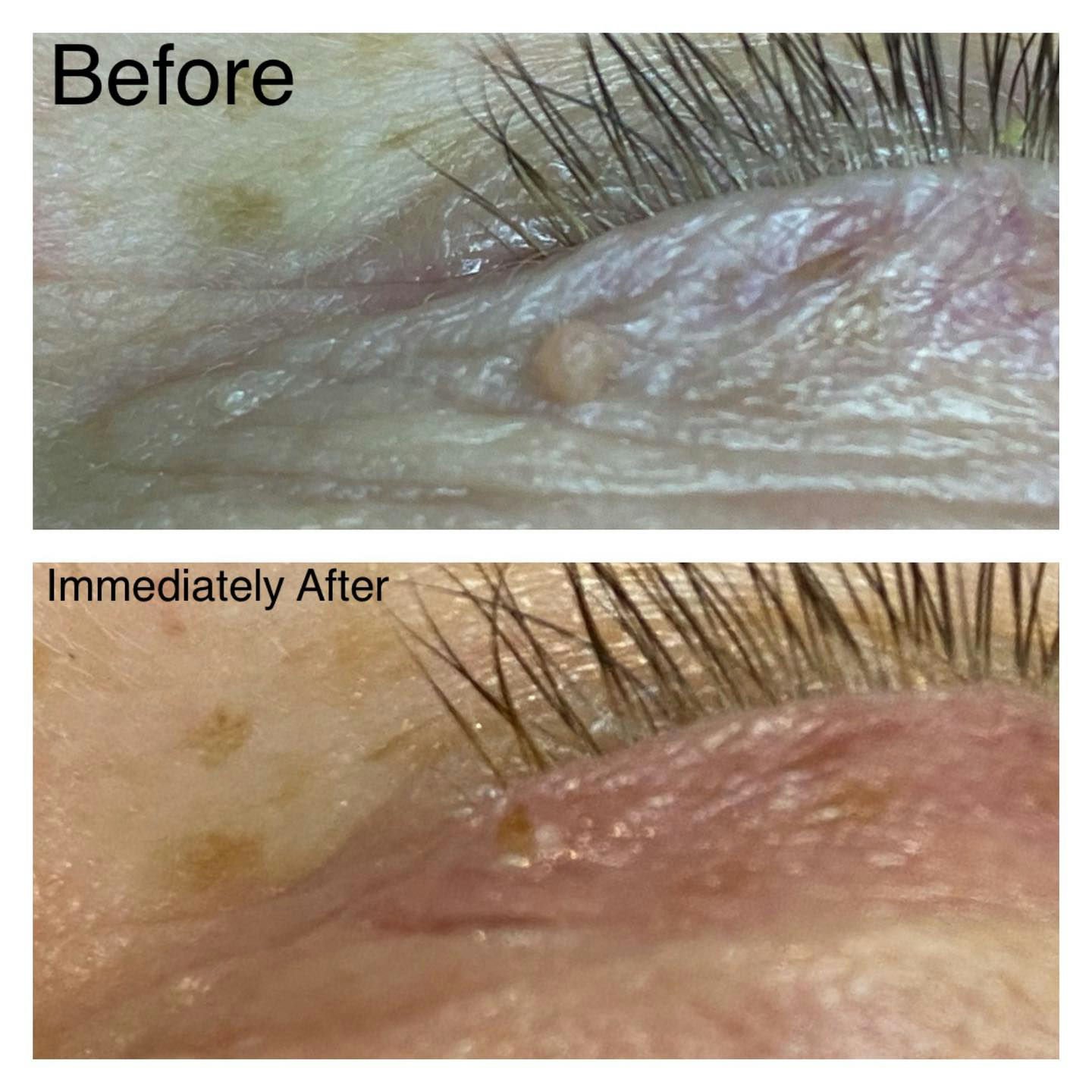
Skin tags are excess skin growths, they are usually wobbly. They are harmless but can be annoying and embarrassing. If skin tags are in an area where they rub, snag on clothing or jewellery they can bleed and be uncomfortable. They mostly occur in areas where there is friction or where the skin forms creases, such as eyes, neck, armpits and groin, also where clothes rub. i.e., shirt collars, bra straps.
Skin tags can be easily treated using advanced electrolysis. It is very effective and can significantly improve the appearance of your skin and increase your confidence as result.
What is the cost of treatment?
If your skin tags are numerous and close together it will not be possible to treat them all in one session as the area would become overworked.
We can work on one area for up to 15 minutes before moving onto the next area.
| Up to 15 minutes | £65.00 |
| Up to 30 minutes | £130.00 |
How does it work?
I work in a very precise manner, using an advanced electrolysis technique. A very tiny needle emitting a diathermy current is applied to each skin tag individually. There are different types of skin tag, most will be removed at the time of treatment, leaving a small scab which must be left to lift off when the skin beneath it has healed. The surrounding skin is untouched and once healed there is no trace that the skin tag was there.
Is it a skin tag or a mole?
As stated above skin tags pose no medical threat they can be removed without reference to your doctor.
I also do mole reduction; these need to be checked with your doctor or dermatologist before we can go ahead and remove them.
As a guide, skin tags will not have hair growing from them, they will be soft and moveable. They will also have developed as you get older in areas subject to friction.
Moles frequently have hairs growing from them and are firm, they usually appear in adolescence so will have been there for a longer period of time.
How many sessions will I need?
This will depend on a few factors. Mainly:
- how many skin tags are present
- how far apart the skin tags are
- how well your skin heals
- how well you follow the aftercare instructions
How often can I have a session?
A minimum of six weeks must be left between each treatment session to ensure full healing each time.
Is the treatment painful?
This is not a sensation-free treatment and there is some discomfort involved! It is best described as a hot pin-prick. The level of sensation does vary from one individual to another. My best advice would be to relax! If you are relaxed you are likely to experience less discomfort than if you are nervous and tense. You may also find the treatment more uncomfortable if you are tired, unwell or during certain times of your menstrual cycle.
Are the results permanent?
Skin tags are associated with friction. If you have a predisposition to skin tags, ongoing treatments may be necessary as new skin tags can form.
What is the aftercare involved?
Immediately after the treatment, the skin will normally appear pink/red, warm and there will small scabs where the skin tags have been removed. Over the following 48 hours tiny healing crusts will form. No cleanser or make-up should be used during the first 48 hours. During the first 48 hours you will need to avoid the following:
- touching the area
- alcohol
- exercise
- anything which causes sweating (saunas, steam rooms etc)
Once formed the healing crusts must be kept as dry as possible and must not be knocked or picked off. They will naturally lift off after 5-7 days. Early removal of the healing crusts can delay healing and cause scarring.
You will be best advised to plan your treatment sessions into your schedule when you have a few days to allow the initial healing to take place. This is not a treatment to have immediately before a big occasion.
Once the healing crusts have fallen off, good quality SPF50 or SPF40 must be used on the treated area for at least 6 weeks. Actively sunbathing must be avoided. If you’ve read any of my blogs you’ve probably gathered that I am a huge advocate for wearing SPF daily, all year round. SPF really is your BFF!
Is there anything I can do prior to my appointment?
Yes. Arrive for your appointment make-up free. Removing make-up just before the treatment may result in unnecessary stimulation of your skin, causing redness before we’ve even started.
Use a gentle exfoliator (one with aha’s, fruit acids or enzymes, NOT a granular one) a couple of days prior to your treatment. This will remove any dead skin cells. If dead skin cells are present at the time of treatment they are picked up on the probe throughout the treatment. The constant cleaning of the probe this causes slows down the progress I can make.
Are there any medical conditions that would stop me from being treated?
Yes. At your consultation and initial assessment, we would check for any medical conditions that would prevent us from going ahead with the treatment. To prevent you a wasted journey the following conditions would mean you are unsuitable:
-
cochlear implants
- history of keloid scarring
- haemophilia
- pacemaker
- taking blood thinning medication (Warfarin or aspirin)
- diabetes
- epilepsy
- high blood pressure
- any vascular or circulatory disorders
- recent suntan (you will need to wait until it has faded)
- recent scar tissue in the area to be treated
- use of retinol, Retin A or tretinoin on the area to be treated
It is vital for effective and safe treatment that you are honest when answering the questions at your consultation.
Milia
Are you looking for someone who can remove milia?
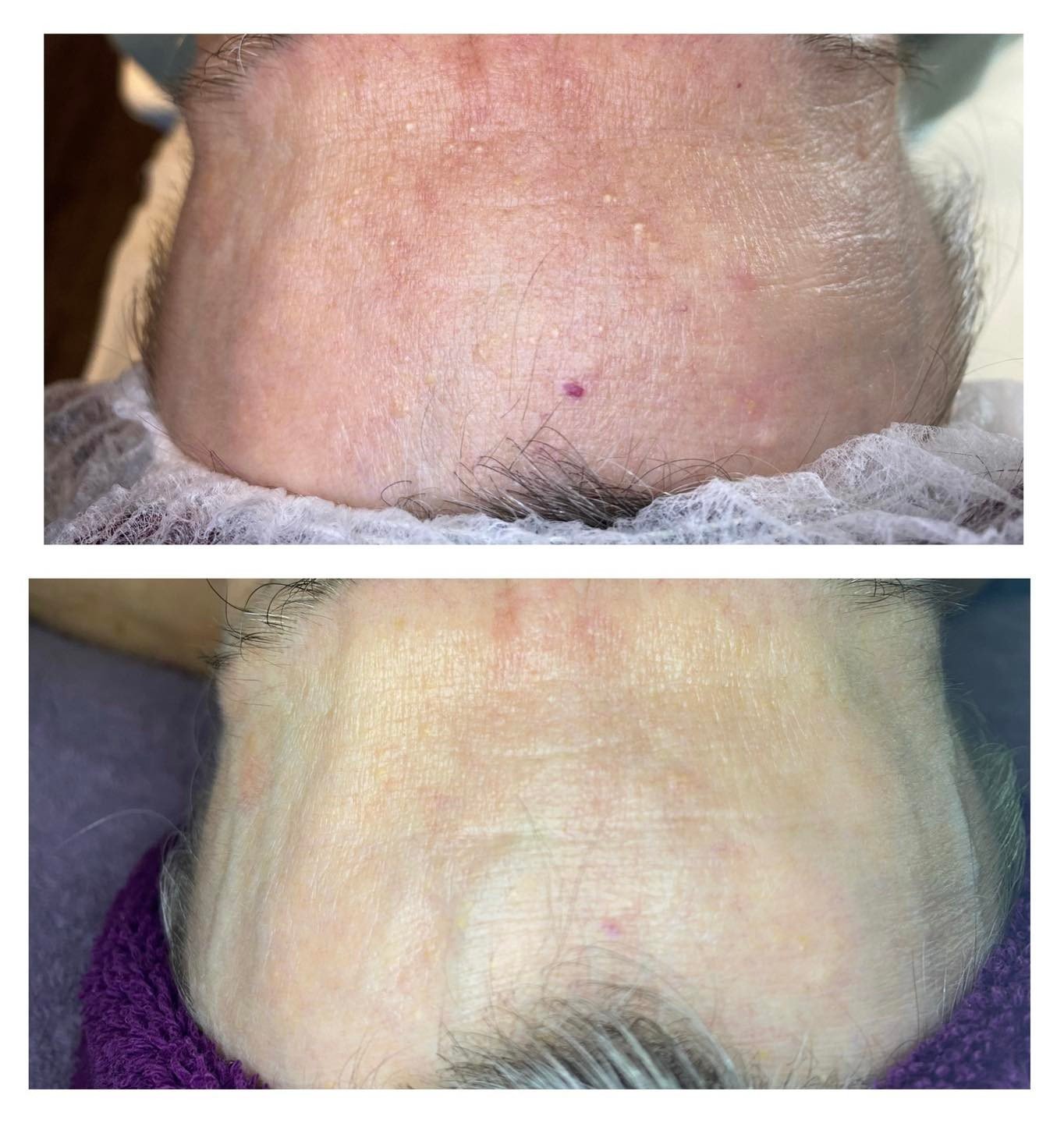
Milia cysts are often referred to as milia seeds, oil seeds and whiteheads. They are mostly associated with dry skin and lie underneath the top layer of skin, very close to the surface. Milia are made up of keratin and usually occur on the cheeks, close to the eyes and on the eyelids. They present as tiny, white, rounded hard lumps.
Squeezing milia isn’t particularly successful and can often result in scarring.
Milia are not contagious and do not pose any health risk.
Milia can be easily treated using advanced electrolysis. It is very effective and can significantly improve the condition of your skin and increase your confidence as result.
What is the cost of treatment?
If your milia are numerous and close together it will not be possible to treat them all in one session as the area would become overworked.
We can work on one area for up to 15 minutes before moving onto the next area. For example, each cheek would class as one area so we could work on each cheek for up to 15 minutes before moving to the other side.
| Up to 15 minutes | £65.00 |
| Up to 30 minutes | £130.00 |
How does it work?
I work in a very precise manner, using an advanced electrolysis technique. A very tiny needle emitting a diathermy current is applied to each milia individually. This results in the milia breaking down and dispersing. The surrounding skin is untouched and once healed there is no trace that the milia was there.
How many sessions will I need?
This will depend on a few factors. Mainly:
- how many milia are present
- how far apart the milia are
- how large the milia are
- how long the milia have been present (older milia will be harder and this will affect how easily they can be removed)
- how well your skin heals
- how well you follow the aftercare instructions
How often can I have a session?
A minimum of four weeks must be left between each treatment session to ensure full healing each time.
Is the treatment painful?
This is not a sensation-free treatment and there is some discomfort involved! It is best described as a hot pin-prick. The level of sensation does vary from one individual to another. My best advice would be to relax! If you are relaxed you are likely to experience less discomfort than if you are nervous and tense. You may also find the treatment more uncomfortable if you are tired, unwell or during certain times of your menstrual cycle.
Are the results permanent?
Milia is associated with dry skin. If you have a predisposition to milia, ongoing treatments may be necessary as new milia can form.
Milia are also linked to the use of skincare products which are too rich, strong, abrasive or unsuitable for your skin type. I will review your skincare routine as part of your consultation and advise accordingly.
There has been some research as to whether there is a correlation between the occurrence of milia and high levels of cholesterol in the diet. The results on this are divided!
Excessive vitamin C consumption is also an associated cause.
What is the aftercare involved?
Immediately after the treatment, the skin will normally appear pink/red, warm and possibly slightly swollen. Over the following 48 hours tiny healing crusts will form. No cleanser or make-up should be used during the first 48 hours. During the first 48 hours you will need to avoid the following:
- touching the area
- alcohol
- exercise
- anything which causes sweating (saunas, steam rooms etc)
Once formed the healing crusts must be kept as dry as possible and must not be knocked or picked off. They will naturally lift off after 5-7 days. Early removal of the healing crusts can delay healing and can negate the treatment.
You will be best advised to plan your treatment sessions into your schedule when you have a few days to allow the initial healing to take place. This is not a treatment to have immediately before a big occasion.
Once the healing crusts have fallen off, good quality SPF50 or SPF40 must be used on the treated area for at least 6 weeks. Actively sunbathing must be avoided. If you’ve read any of my blogs you’ve probably gathered that I am a huge advocate for wearing SPF daily, all year round. SPF really is your BFF!
Are there any medical conditions that would stop me from being treated?
Yes. At your consultation and initial assessment, we would check for any medical conditions that would prevent us from going ahead with the treatment. To prevent you a wasted journey the following conditions would mean you are unsuitable:
- cochlear implants
- history of keloid scarring
- haemophilia
- pacemaker
- taking blood thinning medication (Warfarin or aspirin)
- diabetes
- epilepsy
- high blood pressure
- any vascular or circulatory disorders
- recent suntan (you will need to wait until it has faded)
- recent scar tissue in the area to be treated
- use of retinol, Retin A or tretinoin on the area to be treated
It is vital for effective and safe treatment that you are honest when answering the questions at your consultation.
Seborrhoeic Keratosis
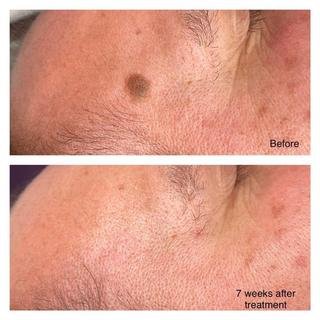
Seborrhoeic keratosis are also known as seborrhoeic warts, senile warts or barnacles. They are a non-contagious, benign (harmless) warty growth with a rough, dry, crusty surface, and range in colour from light golden brown to mid-brown to almost black. They occur most often on the trunk of the body, but they are also common on the head and neck. They appear during the natural ageing process on skins that have a genetic predisposition to this type of growth and are also caused by sun exposure.
If you have a seborrhoeic keratosis that you would like removing, your first step should be to visit your GP to confirm it isn’t a cause for concern and doesn’t require further investigation by a dermatologist. Once this has been confirmed this is where we can help. The NHS don’t fund removal of blemishes for purely cosmetic reasons. Don’t worry though, we offer a very simple procedure to effectively remove seborrhoeic keratosis at our clinic in Lincolnshire.
What is the cost of treatment?
If your seborrhoeic keratosis are numerous or close together it will not be possible to treat them all in one session. During your consultation we will discuss and agree your treatment plan.
|
Up to 30 minutes treatment, including aftercare products |
£130 |
| Up to 60 minutes treatment, including aftercare products | £260 |
How does it work?
Using an advanced electrolysis technique, a diathermy (heat) current and a very fine probe, the seborrhoeic keratosis is gently lifted from the skin. Following removal the area will scab over. The scab must be left to lift off naturally, this can take up to 14 days. Once the scab has lifted off the area must be kept protected from strong UV light for the next 12 weeks.
How many sessions will I need?
Each seborrhoeic keratosis will require just one treatment. How many you would like removing, how long they have been there and the individual size of each one will determine the amount of treatment time and number of sessions you will need.
Is the treatment painful?
This is not a sensation-free treatment and there is some discomfort involved. Most clients are able to easily tolerate the sensation.
Are the results permanent?
Once a seborrhoeic keratosis has been successfully removed and has healed it will not grow back. However, if you have a predisposition to seborrhoeic keratosis, further treatments may be necessary as new seborrhoeic keratosis may form.
What is the aftercare involved?
Following your treatment, you may experience:
- Reddening, swelling and sensitivity of your skin in the area for up to 48 hours
- The treated area and surrounding skin may feel hot for up to 48 hours
- A scab will form
- Your skin may itch as the healing process takes place
- It can take weeks after the initial scab sloughs off before the fading and equalization of colour is complete and the final results are apparent. An exact match to the surrounding skin can never be guaranteed
Following treatment ensure that you adhere to the aftercare instructions to avoid unwanted reactions or infections:
- Do not touch, rub or irritate the treated area
- Do not under any circumstances remove any scabs that may appear. To do so may result in scarring
- Aftercare products recommended to use is: Sterex Witch Hazel Gel for 48 hours, followed by 28 days of Sterex Aloe Vera Gel. These are included in your treatment price. Apply twice a day or as often as required, before usual day/night cream.
- When washing and cleansing around the area, use a gentle soap or perfume free cleanser and gently pat the area dry to avoid dislodging and crusts or scabs
- Avoid activities that may irritate or dislodge any crusts or scabs, e.g., swimming, saunas, steam rooms, facial steaming, facial scrubs, waxing and other beauty treatments until the area has completely healed
- You must avoid UV exposure on the treated area completely during the healing process until the skin has returned to its normal healthy state.
- Once healed, cover and protect sun exposed areas using a good quality, high factor sunscreen at all times, particularly in the summer months
- Avoid using any possible skin sensitisers or irritants such as deodorant, perfumes, fake tan products and perfumed body lotions
Should you have any concerns regarding your treatment please get in touch with me
Are there any medical conditions that would stop me from being treated?
Yes. At your consultation and initial assessment, we would check for any medical conditions that would prevent us from going ahead with the treatment. To prevent you a wasted journey the following conditions would mean you are unsuitable:
- cochlear implants
- history of keloid scarring
- haemophilia
- pacemaker
- taking blood thinning medication (Warfarin or aspirin)
- diabetes
- epilepsy
- high blood pressure
- any vascular or circulatory disorders
- recent suntan (you will need to wait until it has faded)
- recent scar tissue in the area to be treated
- use of retinol, Retin A or tretinoin on the area to be treated
It is vital for effective and safe treatment that you are honest when answering the questions at your consultation.